
Your abuser may monitor your internet use and may be able to view your computer activity. If you have reason to believe that your computer is not secure, you may wish to use a computer in another location to which your abuser does not have access.
In 2016, the Florida Attorney General’s Statewide Domestic Violence Fatality Review Team recommended the need to develop a domestic violence guide for media professionals (reporters, journalists and bloggers). The media plays an important role in raising a community’s awareness of an issue. How news stories are framed can shape the general public’s understanding and perception of an issue; this is especially true when it comes to the issue of domestic violence. Media reports can unintentionally place abuse victims in danger by contributing to a community’s misconceptions and stereotypes about victims and abusers.
Victim-blaming, prevalent in mainstream American culture, is found in music, films, television shows, and social media posts. The goal of this on-line guide is not to critique reporters and other members of the news media for content in those arenas, but to provide members of the professional media with suggestions to help tell these stories in ways that are productive to victims and non- victims alike.
Victim-blaming can and does happen, albeit often unintentionally, in how a news story is covered and the lens from which the story is framed. The way that media reports on domestic violence can offer individuals not experiencing the violence a false sense of control, giving the audience the perception that the victim could have done something to stop the violence and that the audience could not have similar experiences. Statements such as “If I were in the same situation I would,” or “If only she had done,” create the false belief that the victim had control over the violence occurring, which is not the case. Victim-blaming can also occur when stories suggest the victim has done something to cause or provoke the violence by using statements such as “she was crazy,” “obnoxious,” “out of line,” a “bad parent/spouse,” or by stating that victims chose to stay in the relationship.
Media professionals have an opportunity to impact the ways communities support survivor safety and hold perpetrators accountable by changing the syntax in reporting. For example, the use of the passive voice shifts attention away from perpetrator responsibility and contributes to the perception that violence just happens and communities are powerless to prevent it. Research indicates that describing acts of violence by naming the behavior of the perpetrator instead of the victim affects how people view the person responsible for the violence.
A community may be more motivated to work toward supporting the safety of survivors and their children if violence is attributed to the perpetrators’ behavior. Reporting practices, in these cases, help save lives.
Domestic violence and family violence are often used interchangeably and generally refer to types of abuse that include intimate partner violence, elder abuse, child abuse, sibling abuse, and other interfamilial violence. The Florida statutory definition of domestic violence includes family members, persons residing together as if a family, and persons having a child together.
Intimate partner violence (IPV) is violence in which one person engages in strategic, violent, and patterned behavior toward their intimate partner. While the term is often used interchangeably with domestic violence, IPV expands upon the traditional view that domestic violence is committed by a husband toward his wife to include relationships between non-married partners, including the lesbian, gay, bisexual, and transgender (LGBT) communities. Women are typically at higher risk of experiencing intimate partner violence due to the inequality and imbalance of power between women and men in society. As a result of gender discrimination, and the abuser’s control tactics, women often have limited resources to escape abusive situations or to seek justice.
The term gender-based violence reflects the role gender inequality plays in intimate partner violence. The Florida Coalition Against Domestic Violence recognizes that there are also male victims of domestic violence and that their experiences of violence should not be minimized. However, research indicates that more than 90 percent of "systematic, persistent, and injurious" violence is perpetrated by men. Therefore, the media guide uses male pronouns when referring to the perpetrator and female pronouns when referring to the survivor.
Terminology is important in the way we describe the person committing the violence and the recipient of the abuse.
There are some contextual differences between the social definition of domestic violence and Florida’s legal definition. Florida’s legal definition does not include emotional or psychological forms of abuse that can have a serious impact on survivors’ safety and psychological wellbeing but, on their own, are not a crime. Batterers can maintain power over their partners through verbally, emotionally, and financially abusive tactics, but as standalone actions, there may not be legal recourse for these behaviors.
Intimate partner violence is more than just physical assault and is defined as a pattern of behaviors batterers use against current or former intimate partners to establish power and control. It can include physical, sexual, emotional, spiritual, or economic abuse, as well as the use of threats, isolation and pet abuse, threats related to children, and a variety of other behaviors to maintain power over one’s partner through violence, fear, and intimidation. Intimate partner violence affects millions of individuals across the United States regardless of age, economic status, race, religion, or education. Intimate partner violence impacts approximately one in four women in the United States annually.
The term "coercive control" provides holistic representation of the various tactics a batterer uses beyond viewing it as a "fight" between partners. Coercive control is the means by which a batterer systemically eradicates the survivor's liberty and freedom to strip away her sense of self. Coercive control tactics amplify violence by creating fear, withholding resources, and violating the survivor's rights and liberties. Evan Stark, an author and expert in the field of domestic violence, defines coercive control as "a malevolent course of conduct that subordinates women to an alien will by violating their physical integrity (domestic violence), denying them respect and autonomy (intimidation), depriving them of social connectedness (isolation), and appropriating or denying them access to the resources required for personhood and citizenship (control)."
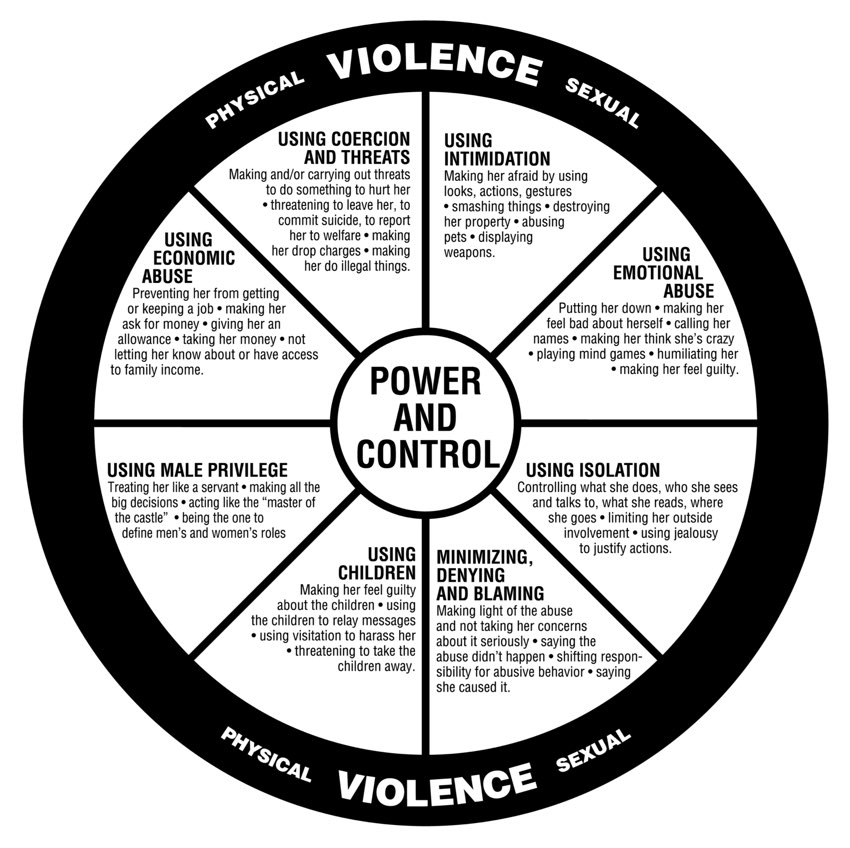
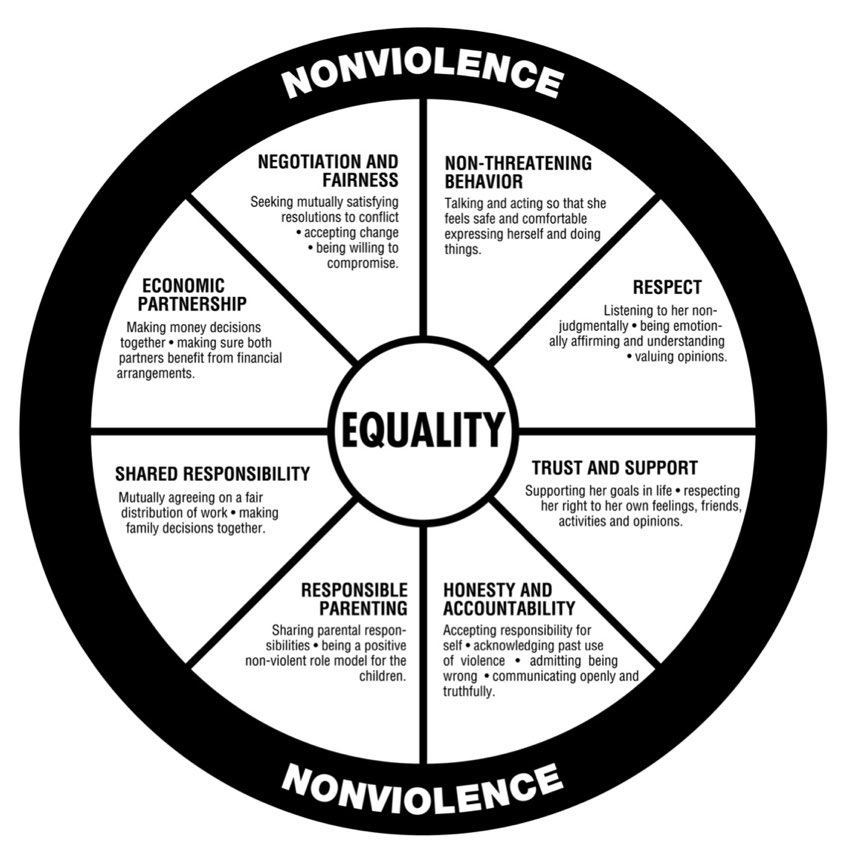
Media professionals can challenge common misconceptions about intimate partner violence by examining how they report domestic violence. Several myths are inadvertently perpetuated because beliefs about the underlying causes of the violence are misunderstood. A better understanding of the problem can help media professionals identify and accurately represent the intimidation, isolation, and coercion that survivors experience.
Fact: Intimate partner violence is prevalent in every community:
Tips for media professionals: Media professionals can present local, state, and national statistics on the prevalence and scope of intimate partner violence and reinforce that intimate partner violence occurs across all communities and affects all age groups. Repeated messaging helps change perceptions.
Fact: Intimate partner violence is a crime committed by one person against their intimate partner. The perpetrator is responsible for the violence. It does not passively occur between partners – it’s a choice made by the perpetrator of the violence. The perpetrator’s violence impacts the entire family, workplace safety, and the community at large.
Tips for media professionals: Media professionals can provide statistics on the healthcare and economic impact of intimate partner violence to promote the need for a collective community response to end intimate partner violence for the benefit of all citizens.
Fact: Research indicates that more than 90% of "systematic, persistent, and injurious" violence is perpetrated by men.[10] The Department of Children and Families Office of Domestic Violence (ODV) recognizes that there are male victims of intimate partner violence and that their experiences of violence should not be minimized. However, women are five times more likely than men to be victimized by an intimate partner.
Tips for media professionals: ODV is available to assist media professionals with information on the underlying dynamics of intimate partner violence and the strategies perpetrators use to keep victims under their control.
Fact: There are a number of reasons why survivors may stay in a relationship where violence is occurring. When evaluating the violence, a better question to ask is, “Why does the abuser choose to abuse?”
Survivors’ choices are unique and personal:
Tips for media professionals: Media professionals can examine the challenges survivors face when attempting to leave and describe the barriers to safety they may encounter. Identifying power and control tactics used by batterers and observing the systemic responses for holding them accountable provides contextual understanding of survivors’ experiences. Focusing on the batterer’s use of violence to maintain control illustrates the complexities of survivors’ experiences, instead of placing responsibility on the survivor for staying. Questions to consider include:
These questions demonstrate an existing pattern of violence, which helps raise awareness of the warning signs among the general public and helps prevent future cases of abuse and intimate partner violence related crimes/deaths. For example, a news report including information about the perpetrator’s prior use of violence, threats, stalking, and violations of court orders, shows your audience the warning signs leading up to the case being reported.
Fact: According to David Garvin, Chairperson of the Batterer Intervention Services Coalition of Michigan (BISC-MI), “battering is a purposeful, instrumental and strategic behavior designed to bring about a result.” Intimate partner violence is a deliberate act perpetrators use to intimidate and coerce their current or former partners.
Tips for media professionals: The image batterers present of themselves to friends, relatives, or community members is often radically different from the tactics of coercive control to which they subject their victim.
Media professionals should be aware that interviews describing batterers as “nice,” “charming,” or “a good father” without any mention of statistics/expert data that perpetrators often hide this behavior from others contributes to the idea that the incident is out of character or an isolated incident, instead of the batterer’s choice to use violence.
Fact: Intimate partner violence is never the fault of the survivor. The batterer made a choice to act in a certain way and is, therefore, responsible. Blame is a way to manipulate the survivor and other people into believing that the violent behavior was provoked, instead of seeing the perpetrators attempts to maintain control in the relationship.
Tips for media professionals: Safety and confidentiality issues should be considered before interviewing a survivor.
For example:
Use: “Robert Anderson, Jr. stabbed Mary Smith 32 times after their break up.”
Instead of: “Mary Smith was stabbed 32 times after she broke up with her high school sweetheart.”
Researchers have found that shifting the focus from a victim of a crime onto the perpetrator reduces victim-blaming. Using batterer-focused language rather survivor-focused language may help reduce the perception that the survivor is responsible for the abuse.
Fact: Intimate partner violence is not limited to physical abuse and also includes verbal, emotional, financial, and psychological abuse. Physical acts of violence are often preceded by other forms of abuse. Abusers gain power in the relationship by manipulating their partners. Signs of manipulation early in the relationship may include irrational jealousy and controlling behaviors that are disguised as loving concern for the survivor’s wellbeing. Batterers often isolate the survivor by deciding with whom their partner interacts and how often.
Abusers may exhibit subtle warning signs of abusive behavior such as:
Tips for media professionals: Abusers can be charming and show no sign of violent behavior outside of the home, leading to the public perception that the batterer is a caring and devoted partner. Most people do not want to believe that their family member, friend, or colleague is capable of such violence. Describing the warning signs for abuse can educate survivors, friends, family members, and the community on indications that the partner is abusive. Media professionals can investigate information that demonstrates existing patterns of intimidation, threats, and coercive control, and avoid describing intimate partner violence as isolated acts. There often have been many warning signs indicative of an escalating pattern of violence.
Fact: There are 15.5 million children in the United States living in families in which partner violence occurred at least once in the past year, and seven million children live in families in which severe partner violence occurred. Although the batterer may not abuse the children, there is a direct impact on children’s wellbeing when their mother is being abused. Perpetrators of intimate partner violence create safety and risk concerns for children by their choice to use violence or by using the children as a means of controlling their partner.
Survivors use a variety of protective strategies, for themselves and their children. These strategies include but are not limited to maintaining supportive relationships with their children, friends, and community; parenting effectively; providing for the physical needs of the children; safety planning with children; and maintaining employment. Survivors use both informal safety strategies (e.g., taking children for overnight visits with family/friends when the batterer is most threatening) and formal strategies (e.g., going to a certified domestic violence center, obtaining an Injunction for Protection, or calling the police) in response to the risks to the children.
Tips for media professionals: Media professionals should refrain from blaming a non-offending parent who still may be living in the home with the abusive parent as “failing to protect” their child(ren) from the violence. Whenever possible, media professionals can identify the non-offending parent’s protective capacities by pointing out the methods by which they kept their children safe, such as supplying their children with an emergency cell phone and teaching them how to dial 911. Children are harmed psychologically by the violence to which they were exposed, even if they do not directly witness an act of violence. Statements such as "the children were unharmed” can be qualified as “the children were not physically harmed.”
There are often reactions of shock and disbelief from friends, family members, and co-workers after an intimate partner homicide occurs. Continued coverage in the weeks following the fatality may provide information about an escalation in violence or reveal other risk factors that were present prior to the homicide. Media coverage of intimate partner homicides should include the recognized research-based risk indicators for homicide, such as that women are much more likely to be killed by their partners than by a stranger.
Media professionals can help the general public understand that there are frequently antecedents or patterns leading up to the homicide. Please consider using the following research-based data in your coverage.
The Perpetrator:
Media professionals can have a significant impact in educating communities about the resources available for survivors. Florida’s 41 certified domestic violence centers offer an array of services for eligible survivors and their children including information and referrals, counseling, case management, emergency shelter, a 24-hour hotline, advocacy for survivors, safety planning, court/legal advocacy, and community education. The executive directors of these local centers may not be able to comment on specific cases but can answer questions about the dynamics of intimate partner violence and resources available to survivors and their children. Reporters should also include the Florida Domestic Violence Hotline Number.
DVP operates a trilingual statewide domestic violence hotline in English, Spanish, and Creole. Advocates are available 24-hours a day, 365 days a year, to provide support, advocacy, information and referral to survivors and their friends and family members. Advocates can connect callers to their local certified domestic violence center for immediate access to services.
1-800-621-4202 (TDD)
Florida Relay 711
Additionally, the Florida Legal Services, Inc. provides attorneys to answer survivors’ legal questions regarding injunctions for protection, divorce, custody, housing, immigration, and other civil legal matters at no cost to survivors. The hotline attorneys are available 8:00 .a.m. to 4:00 p.m. (EST) Monday through Friday. Survivors can call toll free 1-800-5000-1119 ext. 3. TDD 1-800-621-4202; Florida Relay 711; Interpreter services are available for survivors with limited English proficiency.